
SEO is based on science, let's pull the curtain back and have a look at it.
Why Search Engines Were Invented
A brief timeline of events
Before search engines, the Internet existed simply as pages. URLs weren’t advertised on billboards and flyers or handed out on business cards. The only way of getting from one site to another was through a specific link to an existing webpage. If you didn’t have the exact link, you couldn’t find what you were looking for. That’s when search engines got their start.
Phase 1
In 1966 ARPAnet Project initiated the foundation for modern internet, which was followed with the creation of the first internet registry in 1972. The term 'Internet' was officially coined in 1974.
Phase 2
World Wide Web is created.
In 1989, Alan Emtage, a student at the McGill University in Montreal, conceives of and begins the world’s first internet search engine, Archie. This is the first instance of the World Wide Web as we know it today.
Phase 3
the 'Wild West' era of the World Wide Web.
In 1991, the World Wide Web was opened to the public and a number of companies popped up to help organize the world's information.
Phase 4
Enter: Google
Google was founded at Stanford University in California by Sergey Brin and Larry Page in 1998. Their mission was “to organize the world’s information and make it universally accessible and useful.”
We believe Google's success came from their desire and ability to provide higher-quality results for searchers using their platform. Understanding searcher intent and finding the most accurate, relevant, and trustworthy websites that match each query have allowed Google to stand out from the competition.
And this commitment to quality worked.
As of February 2021, Google had a global search market share of 92.05%*
This is why so many people optimize with Google Search in mind: they’re the best at what they do. It’s so popular that it’s become a verb.
With the amount of information available on the web, finding what you need would be nearly impossible without some help sorting through it.
Google ranking systems are designed to do just that: sort through hundreds of billions of webpages in their Search index to find the most relevant, useful results in a fraction of a second, and present them in a way that helps you find what you’re looking for.
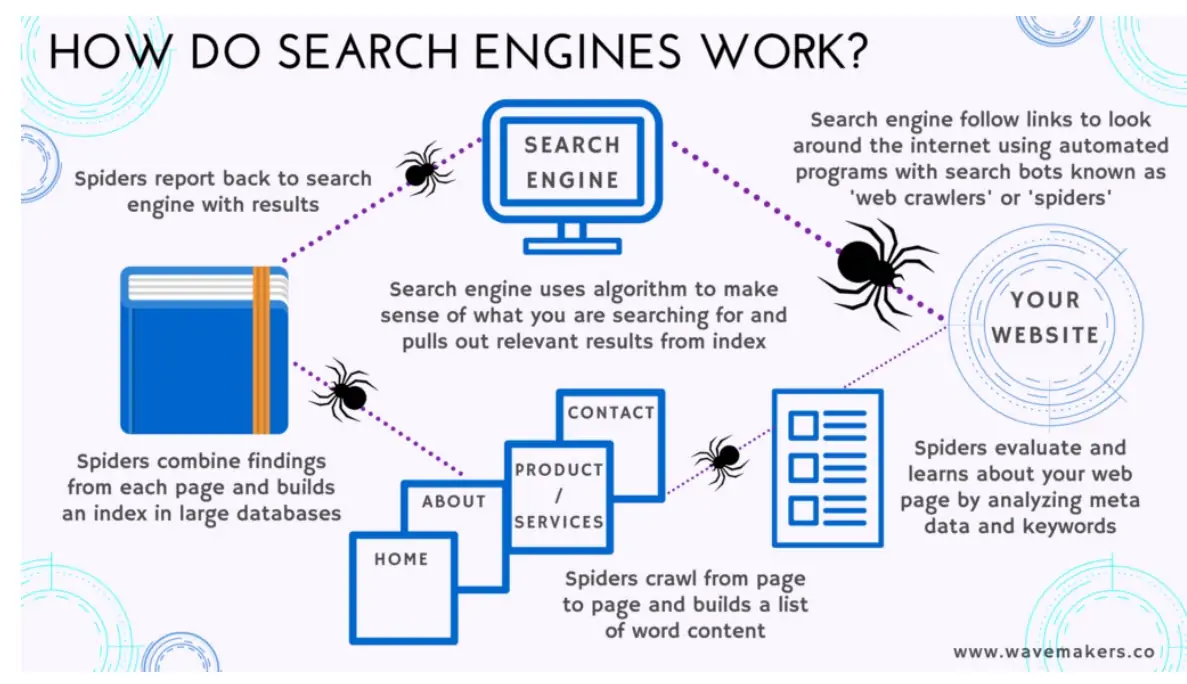
“If anyone wanted ter find out some stuff, all they’d have ter do would be ter follow the spiders. That’d lead ‘em right! That’s all I’m sayin’.”
- Hagrid, Harry Potter and the Chamber of Secrets
Remember how we talked about relevance and trust earlier? This is exactly what spiders are looking for when they crawl your website.
If Google can’t tell what a website is selling when they crawl the website, they’ll pass it over for someone else whose site is clearer and easier to navigate. Good SEO helps elevate sites in the rankings.
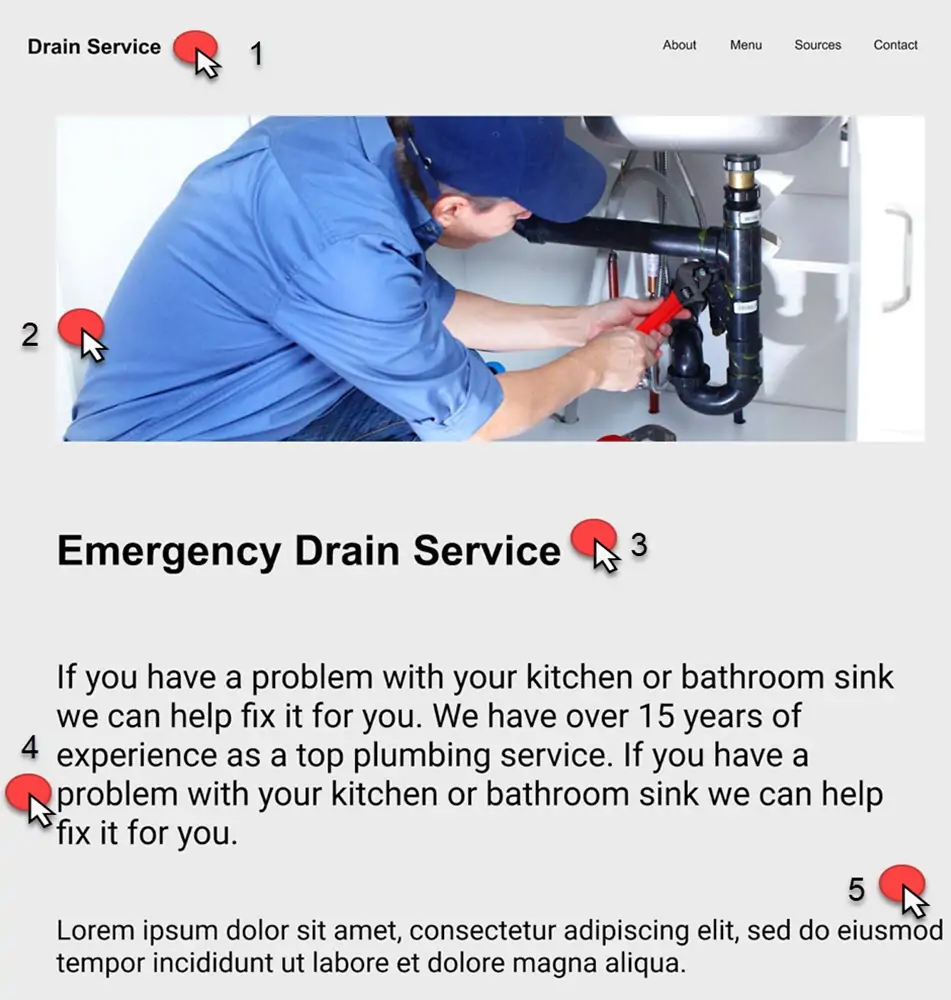
Let’s look at what happens to the spiders who try to index a Hendricks Plumbing competitor who doesn’t have SEO.
Google Algorithm Updates
Google Search has a simple goal—deliver the best user experience possible. And to make money, too. I mean, they are a business, after all. So they provide exemplary service by consistently adjusting and refining how they find, rank, and answer queries. They do this via algorithm updates. Google rolls out hundreds of updates each year. In 2018 alone, they reported 3,234 updates.
Here are a few of the most impactful SEO-related updates:
2012
Penguin
Largely focused on backlinks, Penguin was designed to reduce spam and encouraged quality content for searchers. Google rewarded sites with quality, organic backlinks, and penalized sites that artificially boosted their rankings via link farms or other spam sites.
2013
Hummingbird
This update revolutionized the search landscape as Google’s algorithm began to better interpret searcher intent and context (more like natural speech).
2014
Pidgeon
This update improved Google’s distance and ranking parameters, providing more useful, relevant, and accurate local search results.
2015
Mobile-Friendly Update
With more and more people searching via smartphone, this update encouraged businesses to have a mobile version of their website.
also in 2015
RankBrain
RankBrain introduced artificial intelligence to Google’s arsenal. By discerning true intent of the searcher, Google can deliver more relevant results.
2016
Possum
This update significantly impacted how results were filtered in Google’s local pack. It helped diversify local results and prevented spam from ranking.
2019
BERT
BERT is grounded in natural language processing and is used to better understand the context and nuance of a query, particularly for more natural language/conversational queries.
2019
January Core Update
Google recommends users use Expertise, Authoritativeness, and Trustworthiness (E-A-T) when creating content for their websites. Content aligning with these objectives are prioritized by Google and sites that follow this acronym have a better chance to rank higher.
The search landscape is constantly changing and to be successful you’ll need to evolve your marketing strategies with it. This is why consistently working on SEO is so important.
SEO Makes You Make Sense to Google
Find an SEO provider that does both onsite/offsite work and follows Google’s best practices so search engines can quickly and easily understand your website and index it properly. You need both types of work to rank! If Google can’t tell what it is you sell when they crawl your website, they’ll pass you over for someone else whose site is clearer and easier to navigate. Good SEO helps elevate your site in SERPs, even when the algorithm changes.
Think of onsite work as bones. The website is the framework/skeleton. Offsite work becomes the muscles and tissue that help it to move. You need the combination of them both to move from point A to point B (the first page of Google).

A website is the best place to show why a business is the best at what they do. It’s where they can show off their skillset and demonstrate that they can solve their customers’ needs.
Customers want to find your clients' business.
Now you just have to put them on the first page where they can be seen.
SEO is an important aspect of any local business and with our range of products available, you can seamlessly and easily add an SEO solution to your clients' digital marketing strategy.
Lesson Resources
Your File Download Name goes Here
Add the description for your downloadable file here. You can replicate this row to add more downloads as you require them
Your File Download Name goes Here
Add the description for your downloadable file here. You can replicate this row to add more downloads as you require them
Comments





Copyright © My Web Pros · All Rights Reserved